


If you buy and sell catalytic converters daily, war news matters because it can move platinum, palladium and rhodium quickly. These are the value drivers inside catalytic converters, so when PGM markets move, scrap payouts follow.
Gold usually gets the safe haven spotlight, but PGMs react in a more complicated way. War risk can support prices through higher energy and logistics costs, while worries about global growth can pull prices down if buyers start thinking demand will slow. That tug of war is exactly why the converter market can feel strong one week and softer the next.
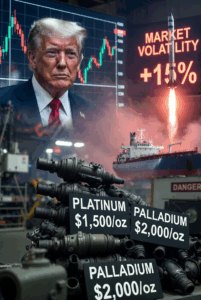
The Platinum Group Metal (PGM) snapshot right now, early March 2026
Platinum is around $2,150 to $2,220 per ounce, with sharp volatility after dipping from recent highs near $2,350.
Palladium is around $1,700 to $1,720 per ounce.
Rhodium is around $11,100 to $11,850 per ounce.
To find the latest catalytic converter prices in Asian countries, download our app here for Apple users or Android users. Currently, this APP is only open for customers. Trial access is available, please email info@brmetalsltd.com.
What scrappers care about, where prices could go next
What supports converter payouts in the near term
Geopolitical risk often adds a risk premium to commodities. When shipping, insurance, fuel, and supply chains get more expensive or uncertain, mining and moving metal costs more. That can support Platinum Group Metal (PGM) prices in the short term, and when PGMs hold firm, converter scrap values typically stay supported.
Right now, the converter market is generally strong, with many common units trading in the USD100 to USD400 plus range depending on type and mix, while high PGM units commanding stronger payouts.
If the conflict escalates or stays elevated, the market can stay supported and spikes can show up fast. For daily traders, that usually means more opportunities to sell into strength.
What can trigger a pullback
If the conflict drags on and starts hitting global growth hard, the market can flip to demand fear. Auto production and industrial demand matter for PGMs. If the market prices in a slowdown, PGM prices can drop quickly, and converter payouts can soften just as fast. That is why you sometimes see big dips even when the news flow looks bullish.
Right now, the converter market is generally strong, with many common units trading in the $100 to $400 plus range depending on type and mix, and high PGM units commanding stronger payouts.
If the conflict escalates or stays elevated, the market can stay supported and spikes can show up fast. For daily traders, that usually means more opportunities to sell into strength.
Practical takeaway for scrappers
This is a market where timing matters more than predictions. When volatility rises, the best approach is to watch daily pricing closely, move product when spreads and bids are favourable, and stay tight with buyers who update pricing frequently and grade accurately.
Near-term outlook still leans stable to higher, because war uncertainty is currently outweighing slowdown worries, but the market can change quickly and a strong week can turn into a fast pullback.
Conclusion
Not only energy prices like oil, diesel, but logistic costs will increase, hence, cost of living will also increase during this crisis. It will also affect the mining and refining of Platinum Group Metal, which is platinum, palladium, and rhodium. As these metals are important elements of catalytic converters, any movement in the price of the Platinum Group Metal market can have an immediate impact on the price of Catalytic Converter in scrap industry.
Want a fast check on today’s values for your mix
Contact us at +65 8102 5860 for a free evaluation. Minimum quantity applies.
#CatalyticConverters #ScrapMetal #PGM #Platinum #Palladium #Rhodium #ConverterScrap